DoBe Explores Japanese Market and Urban Regeneration Trends to Facilitate Collective Overseas Expansion of Chinese Enterprises
Recently, DoBe Group organized a specialized research team to conduct in-depth studies in Tokyo and Osaka's core areas, systematically analyzing practical experiences in urban renewal and commercial office ecosystems to provide strategic insights for Chinese enterprises seeking opportunities in the Japanese market.
Currently, Japan's economy is showing signs of multi-dimensional recovery, creating vast opportunities for Chinese companies to expand overseas. The continuous upgrading of the consumer market drives the simultaneous expansion of commercial and industrial demand; the accelerated optimization of industrial structure, with active technological innovation in fields such as semiconductors and new energy, attracts global capital focus.
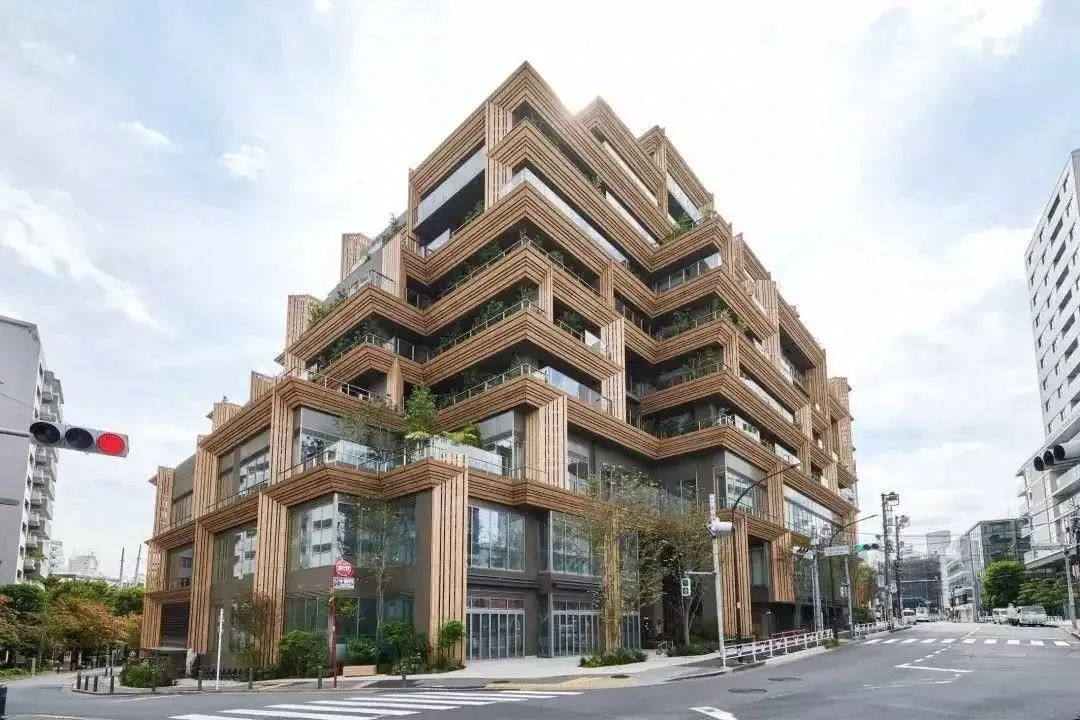
The recovery momentum of the Japanese market is particularly evident in the iteration of urban spaces. As the core hub of the Asia-Pacific region, Tokyo's urban renewal practices provide Chinese enterprises with a dual model of "spatial adaptation + industrial synergy". The Forest Gate project in the Daikanyama area, as the core of the "Greater SHIBUYA" plan, transforms old apartments into a mixed-use complex integrating living, commerce, and office spaces. With its "green ecology + work-live-play integration" positioning, it builds a community-based office ecosystem.
In contrast, the Marunouchi area, since the 1960s, has used the Tokyo Station red-brick building as an anchor point. While preserving its historical character, it connects office buildings and commercial facilities through an underground transportation network, creating Asia's first "24/7 office ecosystem". The combination of "transportation hub + historical landmark" provides an efficient platform for Chinese enterprises to connect with local resources and conduct business activities.
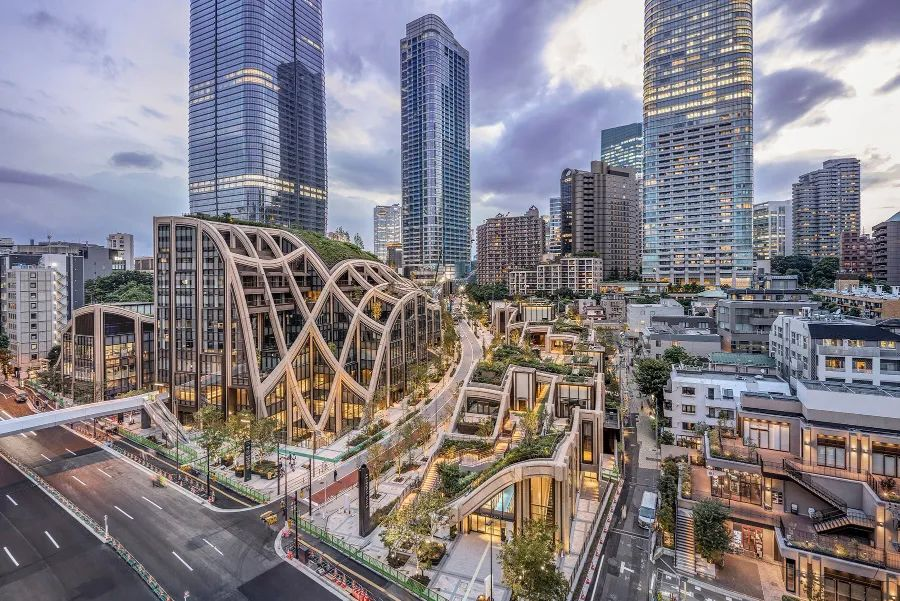
Facing the challenge of scarce land resources, Japan has created new opportunities through vertical space composite development, with the practices of Roppongi Hills and Azabudai Hills offering valuable references. Roppongi Hills implements Mori Building's "Vertical Garden City" concept, breaking through the limitations of horizontal planning by adopting a vertically stacked model integrating "work, residence, entertainment, commerce, education, and leisure" functions. By connecting to orbital transportation networks through a three-dimensional transit system, creating circulating green spaces, and combining tourism with cultural and commercial activities, it ultimately formed a complex supporting 20,000 jobs and 100,000 daily visitors, revitalizing the old urban area.
Azabudai Hills, a 35-year development project, positions itself as a "Modern Urban Village" and "Green & Wellness" hub, integrating 11 business formats with 24,000 square meters of green space and the 330-meter Mori JP Tower to form an "oasis in the sky". Its office spaces focus on corporate headquarters needs, adopting a layered layout of "office + supporting services". International schools and medical facilities significantly enhance the retention rate of multinational employees. The commercial sector introduces high-end retail and specialty dining, creating a "weekday + weekend" traffic complementarity with office scenarios, ensuring stable revenue growth and demonstrating the operational logic of deep integration between "commercial office and lifestyle amenities" in urban renewal.

During the inspection, the practical exchanges between DoBe Group and professional institutions opened key information channels for Chinese companies expanding overseas. Mizuho Bank interpreted Japan's investment policies and cross-border financing solutions, covering real estate finance and exchange rate risk management. King & Wood Mallesons outlined compliance essentials, including company establishment, intellectual property protection, and labor law adaptation. Additionally, the delegation visited YAK Group (real estate brokerage and overseas consulting) and RS Company (a leader in semiconductor wafer regeneration), laying the groundwork for industrial resource connections.
From Daikanyama's community-style offices to Roppongi's vertical complexes, Japan's practices reveal that urban renewal is essentially a dynamic balance between "space supply" and "industrial demand". During this Japan study tour, DoBe Group not only built bridges for industrial collaboration between China and Japan, but also provided a strategic foothold for Chinese enterprises expanding overseas in fields such as commercial office spaces and urban renewal. As a global enterprise deeply rooted in cultural and creative industrial park operation services, DoBe will leverage the insights from this study tour to integrate industrial resources between China and Japan, strengthen its Asia-Pacific business network, facilitate practical progress in two-way investment and cooperation, and build an open and win-win industrial ecosystem.

